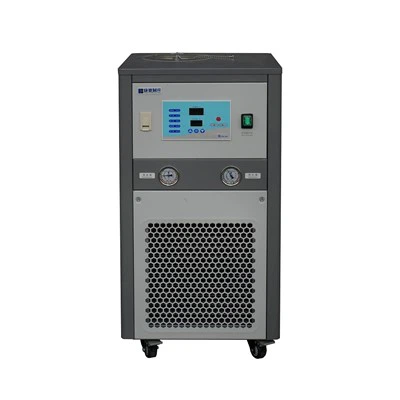

In modern production and operation systems, the stability and controllability of temperature are directly related to product quality, equipment lifespan, and operational safety. Chillers are key equipment for achieving this goal. Through a scientific refrigeration cycle and heat exchange process, they efficiently remove excess heat from the target space or medium, providing a continuous and precise low-temperature environment for diverse application scenarios, becoming an indispensable foundation for industrial manufacturing, commercial facilities, and scientific research.
The operation of a chiller relies on a closed-loop system composed of a compressor, condenser, expansion valve, and evaporator. The compressor provides power, compressing the low-temperature, low-pressure refrigerant gas into a high-temperature, high-pressure state; the condenser uses water or air as a cooling medium, causing the high-temperature refrigerant to release heat and condense into a liquid; after being throttled and depressurized by the expansion valve, the refrigerant enters the evaporator, where it absorbs heat from the object being cooled under low pressure and evaporates, thus completing the cooling process. This cycle repeats continuously, ensuring that heat is continuously removed and maintaining the set temperature level.
In industrial production, the supporting role of chillers is reflected in ensuring precision processes. In plastic injection molding and extrusion processes, stable mold temperature prevents product defects and improves molding efficiency. Chemical reactions often require strict temperature ranges; chillers suppress temperature drift, ensuring consistency between reaction paths and products. Electronic manufacturing involves high-power equipment and sensitive components; chillers rapidly dissipate heat while preventing thermal stress damage, guaranteeing yield and equipment reliability. In the pharmaceutical and biological fields, cell culture, drug synthesis, and analytical testing all rely on chillers to provide a constant temperature environment to meet stringent process and quality standards.
Comfort and safety in commercial and public facilities are also inseparable from chillers. Central air conditioning systems in large buildings use chillers as the core cooling source, creating suitable temperature and humidity indoors, improving employee work efficiency and experience. In data centers, the dense operation of servers generates high heat flux; chillers, combined with terminal cooling equipment, promptly dissipate heat, preventing performance degradation and system interruptions. Medical imaging equipment is extremely sensitive to temperature fluctuations; chillers maintain stable operation, ensuring accurate diagnostic results.
With technological advancements, chillers are continuously being optimized in terms of energy efficiency, environmental friendliness, and intelligence. Variable frequency control and high-efficiency heat exchangers improve partial load energy efficiency, low global warming potential refrigerants reduce environmental impact, and intelligent monitoring systems enable remote management and predictive maintenance, reducing operating costs and extending equipment life. Some systems can also perform heat recovery, using waste heat from the refrigeration process for heating or process heating, expanding energy utilization avenues.
It is evident that chillers, with their reliable cooling capacity, flexible adaptability, and continuously improving comprehensive performance, play a fundamental supporting role in modern temperature control systems, providing a solid guarantee for the stable operation and high-quality development of various industries.