
Your Leading Shell and Tube Evaporator Supplier
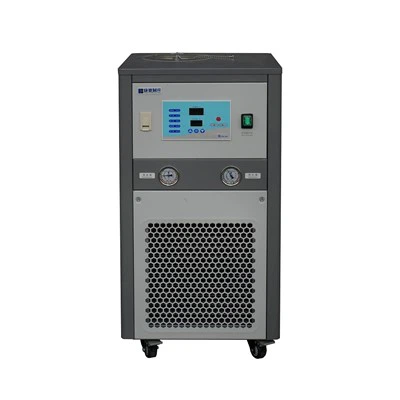
Kansa Refrigeration, a renowned name in the industrial refrigeration sector, has been a leading force since its establishment. Our state-of-the-art factories are the backbone of our high-quality product range. Today, Kansa's products, includingchillers, oil coolers, and cabinet air conditioners, are exported to many regions. Its continuous innovation and commitment to quality have enabled it to gain a firm foothold in the international market, and it remains dedicated to further expanding its global reach.
-
![Evaporator Shell and Tube Heat Exchanger]() Evaporator Shell and Tube Heat ExchangerKansa independently develops and manufactures shell-and-tube evaporators and condensers. The evaporators use 304 stainless steel tubing, eliminating rust and increasing hardness by four times,...view more
Evaporator Shell and Tube Heat ExchangerKansa independently develops and manufactures shell-and-tube evaporators and condensers. The evaporators use 304 stainless steel tubing, eliminating rust and increasing hardness by four times,...view more

Why Choose Us?
Advanced equipment
Our has modern industrial space, Equipped with advanced automated production lines, it houses a full set of high-tech machinery. The factory also features a complete finned heat exchanger production line, a high-vacuum cold well degreasing furnace, and automated production lines for water tanks and fluorine pipelines.
Quality control
We implement a rigorous quality control system at every stage of production, from raw material inspection to the final product.
One-stop solution
Kansa Refrigeration's industrial chillers boast extensive applicability across global industries, delivering stable, efficient cooling solutions that align with diverse production needs—making them a trusted choice for international clients.
Sale services
Our comprehensive pre - sale, sale, and after - sale services are designed to ensure your complete satisfaction.
Types of Shell and Tube Evaporator
Fixed-tube sheet exchanger
The fixed-tube sheet exchanger is typically used for low-pressure applications. This type of exchanger has a number of benefits, including a simple design and easy maintenance. However, it is not as efficient as some other types of exchangers and can be more expensive to operate.
Kettle reboilers
Kettle reboilers are specialized shell and tube exchangers used in distillation columns to vaporize liquid streams. The liquid to be vaporized is fed into the shell, where it is heated by steam flowing through the tubes.
Floating-head exchanger
In a floating-head exchanger, the tube part is free to move within the system. It is a type of shell and tube heat exchanger that is typically used for high-pressure applications. This type of exchanger is more efficient than both fixed-tube sheets and U-tube exchangers, and it is also more expensive to operate. In addition, the floating-head exchanger requires more maintenance than the other two types of exchangers.
U-tube exchanger
The U-tube exchanger is another common type of shell and tube heat exchanger. This type of exchanger is more efficient than the fixed-tube sheet exchanger, but it is also more expensive to operate. In addition, the U-tube exchanger requires more maintenance than the fixed-tube sheet exchanger. Suitable for high-pressure applications, it is a staple in oil refineries and other chemical processing industries.
Function of Shell and Tube Condenser

Heat transfer efficiency: This is determined by the surface area of the tubes, the thermal conductivity of the materials, and the flow characteristics. Efficient heat transfer requires maximizing the contact surface area and using materials with high thermal conductivity.
Material selection: The materials used for the shell and tubes must resist corrosion and withstand high temperatures and pressures. Common materials include stainless steel, copper, and titanium, chosen based on the working environment and fluids involved.
Flow arrangement: The arrangement of fluid flow can be counterflow, parallel flow, or crossflow. Counterflow, where fluids move in opposite directions, typically offers the highest efficiency by maintaining a larger temperature gradient along the length of the exchanger.
Tube diameter and length: The diameter and length of the tubes impact the surface area available for heat transfer and the pressure drop across the condenser. Larger diameter tubes provide more surface area but can increase the pressure drop.
Shell and tube layout: The arrangement and spacing of tubes within the shell influence the flow dynamics and heat exchange efficiency. Baffle plates are often used to direct the fluid flow across the tubes, enhancing turbulence and heat transfer.
Maintenance accessibility: The design should allow for easy cleaning and maintenance to prevent fouling and scaling, which can significantly reduce efficiency. Removable tube bundles and easy access points facilitate regular maintenance.
Application of Shell and Tube Evaporator
Chemical processing: Shell and tube evaporators are used in chemical processing industries to concentrate or purify various solutions. For example, they can be used to evaporate water from a salt solution, or to concentrate acids or other solvents.
Food and beverage processing: In the food and beverage industry, shell and tube evaporators are used to concentrate or extract flavors, aromas, and colors from various food products. They are also used to evaporate water from juices, syrups, and other liquid food products.
HVAC systems: Shell and tube evaporators are commonly used in air conditioning and refrigeration systems. They are used to evaporate refrigerant in order to cool the air or liquid being circulated through the system.
Waste water treatment: Shell and tube evaporators are used in wastewater treatment plants to concentrate the dissolved solids in wastewater. By evaporating the water, the volume of the wastewater is reduced, making it easier and less expensive to dispose of the remaining solids.
Desalination: Shell and tube evaporators are used in desalination plants to remove salt and other minerals from seawater. The seawater is evaporated, leaving behind the salt and other minerals, which can then be removed from the system.
Petroleum Refining: Shell and tube evaporators are used in the petroleum refining industry to concentrate and purify various chemicals and products. They are also used in the production of fuels and lubricants.
Pharmaceuticals: In the pharmaceutical industry, shell and tube evaporators are used to concentrate and purify various chemicals and drugs. They are also used in the production of sterile injectables.
Pulp and paper: Shell and tube evaporators are used in the pulp and paper industry to evaporate water from wood chips and other materials. This process helps to break down the fibers and prepare the materials for further processing.
Renewable energy: Shell and tube evaporators are used in various renewable energy applications, such as geothermal power plants, to evaporate water and generate steam to power turbines.
Mining: Shell and tube evaporators are used in the mining industry to concentrate and purify minerals, such as copper, nickel, and zinc. They are also used in the production of gold and other precious metals.
FAQ
We are one of the most reliable shell and tube evaporator manufacturers and suppliers in China, featured by quality products and good service. Please feel free to buy shell and tube evaporator in stock here and get quotation from our factory. We also accept customized orders.
heat transfer and heat exchanger, Evaporator Shell and Tube Heat Exchanger, heat tube exchanger