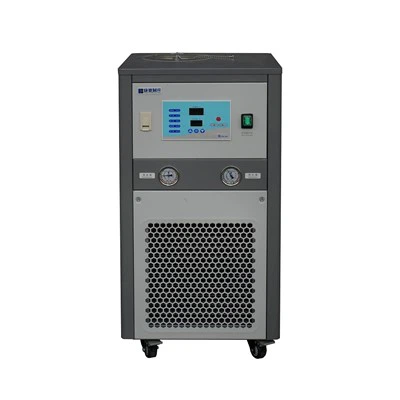

Your Leading Glycol Chiller Supplier
Kansa Refrigeration, a renowned name in the industrial refrigeration sector, has been a leading force since its establishment. Our state-of-the-art factories are the backbone of our high-quality product range. Today, Kansa's products, includingchillers, oil coolers, and cabinet air conditioners, are exported to many regions. Its continuous innovation and commitment to quality have enabled it to gain a firm foothold in the international market, and it remains dedicated to further expanding its global reach.
-
![15 Ton Glycol Chiller]() 15 Ton Glycol ChillerCooling capacity: 46.0kWview more
Total power input: 27.5kW
Pump power input: 2.2kW
Pump head: 25m
Water flow rate: 7.9m³/h
Noise: 69db(A) -
![15hp Glycol Chiller]() 15hp Glycol ChillerCooling capacity: 23.0kWview more
Total power input: 14.0kW
Pump power input: 1.2kW
Pump head: 27m
Water flow rate: 4.0m³/h
Noise: 66db(A) -
![5-ton Glycol Chiller]() 5-ton Glycol ChillerThe 5-ton Glycol Chiller is a high-efficiency refrigeration unit designed for medium to large-scale industrial low-temperature temperature control scenarios.view more
-
![3 Ton Glycol Chiller]() 3 Ton Glycol ChillerThe 3-ton glycol chiller uses ethylene glycol as the cooling medium, with an adjustable outlet temperature ranging from 0°C to -35°C. It's suitable for low-temperature cooling, low-temperature...view more
-
![5HP Glycol Chiller]() 5HP Glycol ChillerKANSA low-temperature industrial chillers are divided into 4 series, namely -5℃, -20℃ and -35℃ series. Users can select the appropriate temperature control series according to actual process...view more
-
![3 Hp Glycol Chiller]() 3 Hp Glycol ChillerThe 3 hp glycol chiller offers excellent cooling performance, a compact size, and strong cooling capacity, capable of lowering temperatures to below freezing. It is suitable for providing cooling...view more
-
![1 Ton Glycol Chiller]() 1 Ton Glycol ChillerA 1-ton glycol chiller is primarily used in industrial production to provide coolant below 0 degrees Celsius. It is typically a mixture of ethylene glycol, with a temperature control range of -5°C...view more


Why Choose Us?
Advanced equipment
Our has modern industrial space, Equipped with advanced automated production lines, it houses a full set of high-tech machinery. The factory also features a complete finned heat exchanger production line, a high-vacuum cold well degreasing furnace, and automated production lines for water tanks and fluorine pipelines.
Quality control
We implement a rigorous quality control system at every stage of production, from raw material inspection to the final product.
One-stop solution
Kansa Refrigeration's industrial chillers boast extensive applicability across global industries, delivering stable, efficient cooling solutions that align with diverse production needs—making them a trusted choice for international clients.
Sale services
Our comprehensive pre - sale, sale, and after - sale services are designed to ensure your complete satisfaction.

Long-distance cooling: Efficient heat transfer over extended piping runs.
Multi-zone temperature control: Ideal for facilities with different cooling requirements.
Freeze protection: Glycol prevents freezing in pipes, even in sub-zero conditions.
Lower refrigerant charge: Refrigerants stay in the central chiller, reducing environmental impact and compliance concerns.
System integrity: Less risk of contamination in food applications due to indirect contact.
Energy efficiency: Centralized chilling and reduced thermal loss help glycol systems deliver consistent performance with lower energy use compared to direct systems—making them a strong fit for energy efficiency marketing in industrial and commercial applications focused on reducing operating costs and environmental impact.
Application of Glycol Chiller
Grocery store display cases
With increasing environmental safety restrictions, grocery stores need chilling units that meet eco-requirements while providing long-lasting and durable solutions. Propylene glycol industrial chillers, which are food grade, are ideal for frozen food chiller cases. They are specifically engineered to efficiently remove heat while being robust enough to withstand constant use.
Produce packing
Maintaining the freshness of fruits and vegetables is crucial in the produce packing industry. Failures, downtimes, and maintenance delays can ruin a shipment of products. Like grocery stores, cooling units must comply with food grade requirements while being robust enough for continuous use. Propylene glycol industrial chillers are engineered to meet the stringent demands of the produce shipping industry, making them an ideal choice for ensuring reliable and effective cooling.
Glycol and breweries
One of the areas where glycol industrial chillers are used the most is the brewing industry, which requires precisely controlled temperatures and conditions. The maintenance of temperature has to be consistent since any fluctuations can have extremely negative effects on the quality of the final product. It is for these reasons that propylene glycol industrial chillers help to precisely regulate and maintain container temperatures.
Ice rink
Engineering an outdoor ice rink in a warm climate presents unique challenges. However, glycol chillers, which can cool below the freezing point of water, make it feasible. In such installations, glycol is pumped through mats placed beneath the ice rink surface. Water sprayed over these mats then freezes upon contact, allowing the rink to maintain ice even in warmer temperatures.
Dairy products
Similar to breweries, the quality of dairy products heavily depends on an effective cooling system, as inadequate or unsuitable systems can lead to bacterial growth. Consistent temperature control throughout the dairy manufacturing process is essential. Milk is pumped directly from cows into cooling units, which store it until further processing.
The main difference between glycol chiller and water chiller are their freezing points and heat transfer capabilities.
Pure glycol or a mixture of glycol and water has a significantly lower freezing point than pure water. Consequently, glycol-based chillers are better suited to low-temperature environments.
On the other hand, water has a better ability to retain and conduct heat from the associated process. As a result, the thermal exchange efficiency for a chiller will be higher than for a glycol chiller.
In general, consider the ambient temperature at the installation site and the desired process temperature before selecting the chiller type. Both glycol and water chillers effectively dissipate the high temperatures generated by the production process.

FAQ
We are one of the most reliable glycol chiller manufacturers and suppliers in China, featured by quality products and good service. Please feel free to buy glycol chiller in stock here and get quotation from our factory. We also accept customized orders.
glycol for cooling system, glycol pump kit, propylene glycol chiller