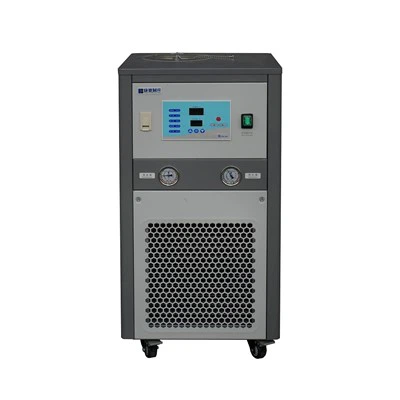

In modern industrial production and mechanical transmission systems, the role of oil coolers has evolved from auxiliary cooling equipment to a core component maintaining the normal operation of the system.Through precise control of the temperature of lubricating oil and other process oils, they directly affect the lubrication conditions, operational accuracy, and service life of equipment, thus determining the stability and economy of the production process. A full understanding of the importance of oil coolers helps to give them due attention and investment in equipment configuration and management.
Oil in mechanical systems performs multiple functions, including lubrication, cooling, cleaning, and sealing. Its physical properties, especially viscosity, are extremely sensitive to temperature changes. When the oil temperature is too high, the viscosity decreases, making it difficult for an oil film to form stably between friction surfaces, leading to increased mechanical wear and a shortened lifespan for critical components such as bearings, gears, and guide rails. Oil coolers can continuously and efficiently remove heat generated by high-speed operation, heavy-load shearing, or external heat sources, keeping the oil within its designed viscosity range, ensuring sufficient lubrication and reducing friction losses. This effect is particularly significant in CNC machine tools, machining centers, large gearboxes, and hydraulic systems. It effectively reduces precision degradation and sudden malfunctions caused by lubrication failure, extends equipment maintenance cycles, and minimizes the impact of unplanned downtime on production.
In precision manufacturing, oil temperature fluctuations directly affect machining quality. Taking grinding machines and high-precision milling as examples, the difference in thermal expansion caused by oil temperature changes is transmitted to the workpiece and cutting tool, resulting in dimensional deviations and increased surface roughness. Oil coolers, with their high-precision constant temperature control capabilities, stabilize the oil temperature within a narrow range, suppressing the interference of thermal deformation on process parameters, thereby improving product consistency and yield. For hydraulic systems, excessively high oil temperatures not only reduce system rigidity but also cause pressure drift and seal aging. Oil coolers maintain the oil within a reasonable temperature range, ensuring the hydraulic circuit remains sensitive and reliable, reducing leakage risks and maintenance frequency.
The importance of oil coolers is also reflected in their contribution to the overall energy efficiency of equipment. Modern oil chillers employ efficient heat exchange structures and variable frequency drive technology, dynamically adjusting cooling capacity according to actual heat load to avoid energy waste caused by full-load operation and reduce operating electricity costs. Some units incorporate heat recovery designs, using waste heat generated during the refrigeration process for workshop heating or preheating of upstream processes, achieving cascaded energy utilization and improving overall energy efficiency. In terms of environmental compliance, the use of new refrigerants with low global warming potential reduces the negative impact of equipment operation on the atmospheric environment, aligning with increasingly stringent industry standards and sustainable development goals.
From an operation and maintenance management perspective, the intelligent monitoring and fault early warning system equipped in the oil chiller can collect key parameters such as oil temperature, flow rate, and pressure in real time, and identify potential anomalies in advance through data analysis, guiding preventative maintenance. This proactive management model reduces the probability of sudden failures, optimizes spare parts inventory and maintenance arrangements, further reduces operation and maintenance costs, and improves production continuity.
In summary, oil chillers, with their multiple values of stable lubrication performance, ensuring process precision, reducing equipment wear, saving energy, and optimizing operation and maintenance, have become an indispensable supporting force in modern industrial equipment systems. Its role in ensuring long-term, efficient operation of equipment, improving product quality, and reducing overall costs has transcended its simple cooling function, becoming a fundamental technological guarantee supporting the steady development of the industry.