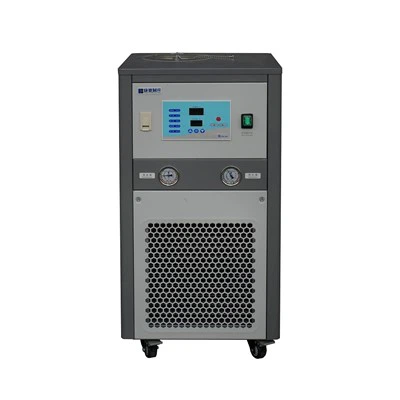

The design philosophy of oil coolers is based on a deep understanding of oil thermal management needs and industrial operating environments. Guided by the principles of thermodynamics and fluid mechanics, it integrates reliability, energy efficiency, and adaptability requirements to construct a system solution capable of precise temperature control, stable operation, and long-term service. Its essence lies not only in removing heat from the oil, but also in maintaining lubrication performance and process stability under complex operating conditions through scientific structure and intelligent control, thereby providing robust thermal protection for modern industrial equipment.
From the outset, a comprehensive understanding of the application is essential. Different mechanical systems have varying heating characteristics, oil types, circulation parameters, and temperature control accuracy requirements. This necessitates customized considerations for oil cooler design in terms of cooling capacity matching, heat exchange methods, and structural layout. The design philosophy emphasizes basing decisions on measured data, combined with process windows and load fluctuations for heat load calculation, avoiding capacity deviations caused by relying solely on experience. Paying close attention to the variation of oil viscosity with temperature ensures that the equipment maintains viscosity within the optimal lubrication range even when oil temperature changes, thereby reducing friction loss and thermal stress shock at the source.
In terms of heat exchange design, the focus is on improving heat transfer efficiency and oil corrosion resistance. As the core component of the oil cooler that directly contacts the oil, the evaporator's flow channel structure, material selection, and surface treatment must balance low flow resistance and high heat transfer coefficient, while also resisting the chemical corrosion caused by long-term oil exposure. The condenser, based on the cooling medium conditions and installation environment, makes a reasonable trade-off between water cooling and air cooling, achieving a balance between efficient heat dissipation and low-noise operation through optimized fin arrangement, pipe diameter ratio, and matching with fans or water pumps.
Energy efficiency and environmental protection are important components of modern design concepts. By introducing variable frequency drive technology, the compressor and auxiliary equipment can dynamically adjust operating parameters according to the actual load, reducing energy waste under partial load. Using refrigerants with low global warming potential reduces the impact on the atmospheric environment. Where feasible, heat recovery loops can be integrated to convert waste heat from refrigeration into usable heat sources, achieving cascaded energy utilization. This design philosophy not only responds to energy conservation and emission reduction policy requirements but also optimizes long-term operating costs for users.
Intelligent and reliable design is consistently emphasized. Modern oil coolers require embedded high-sensitivity temperature, pressure, and flow sensors, relying on intelligent control algorithms to achieve rapid response and precise adjustment, suppressing temperature overshoot and hysteresis. Safety protection logic must cover high and low pressure anomalies, insufficient oil flow, antifreeze, and overload conditions, ensuring the equipment promptly switches to protection mode in case of emergencies to avoid cascading failures. The structural layout should consider ease of maintenance, with key components easily disassembled and inspected to shorten maintenance time and reduce the risk of human error.
Overall, the design philosophy of oil chillers aims for precise thermal management, utilizes efficient heat exchange and reliable control, and extends to energy efficiency optimization and intelligent operation. While meeting current process requirements, it also allows for flexibility to adapt to future changes in operating conditions. This philosophy deeply integrates thermodynamic principles, materials science, control engineering, and industrial needs, making oil chillers not only cooling tools but also core technological carriers that ensure long-term, efficient equipment operation and stable product quality.