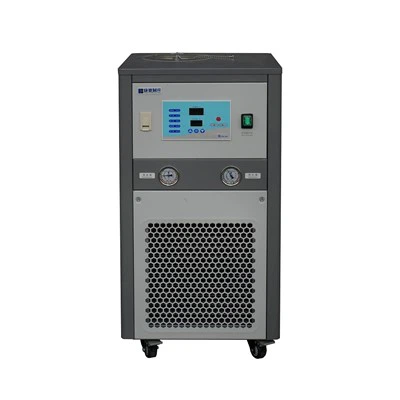

The fundamental function of a chiller stems from the principles of thermodynamics and fluid mechanics. Relying on a closed-loop refrigeration system, it achieves continuous cooling and constant temperature control of a target medium or space. Its fundamental purpose is to efficiently remove excess heat generated during production, ensuring stable process parameters, safe equipment operation, and a comfortable operating environment. Understanding its functional composition and operating mechanism helps in grasping key elements during application and maintenance, maximizing equipment efficiency.
The core function of a chiller is accomplished by a refrigeration cycle, typically involving four stages: compression, condensation, throttling, and evaporation. The compressor, as the power source of the cycle, draws in low-temperature, low-pressure gaseous refrigerant and compresses it into a high-temperature, high-pressure state, creating conditions for subsequent heat release. Subsequently, the high-temperature refrigerant enters the condenser, releasing heat through heat exchange with cooling water or air and condensing into a liquid state. The liquid refrigerant then undergoes throttling and pressure reduction through the expansion valve, resulting in a rapid drop in temperature and pressure, forming a low-temperature, low-pressure two-phase mixture that enters the evaporator. In the evaporator, the refrigerant absorbs heat from the medium being cooled and evaporates, lowering the temperature of the target object. The evaporated gaseous refrigerant then returns to the compressor, starting a new cycle. This closed-loop operation ensures the directional transfer of heat and continuous temperature control.
Beyond basic cooling functions, chillers extend to stable temperature control and load adaptation capabilities. With the help of temperature sensors and automatic control units, the equipment can monitor temperature changes in the cooled circuit in real time and adjust the compressor operating frequency, cooling medium flow rate, or fan speed to maintain the temperature within the set range, meeting the needs of applications highly sensitive to temperature fluctuations, such as precision machining, chemical reactions, or electronic equipment. Simultaneously, the chiller can dynamically adjust its output cooling capacity according to actual heat load changes, avoiding energy waste caused by excessive cooling and improving the system's economy and energy efficiency ratio.
Safety features are also a crucial component of a chiller's basic capabilities. High and low pressure protection, overload protection, anti-freeze protection, and flow monitoring devices work together to intervene promptly under abnormal operating conditions, preventing equipment damage or system failure. These functions ensure the chiller remains stable in complex or long-term industrial environments, reducing the risk of unexpected downtime.
Furthermore, chillers can be integrated with heat recovery devices to convert waste heat generated during the refrigeration process into usable heat for heating or process heating, achieving cascaded energy utilization. This extended function improves the overall energy efficiency of the system, meeting the requirements of sustainable development.
In summary, the basic functions of a chiller encompass efficient refrigeration, constant temperature control, load adaptation, and safety protection, and its value is further enhanced through expandable heat recovery and intelligent control. These fundamental capabilities form the backbone of modern temperature control systems, providing reliable support for stable operation and quality improvement across various industries.