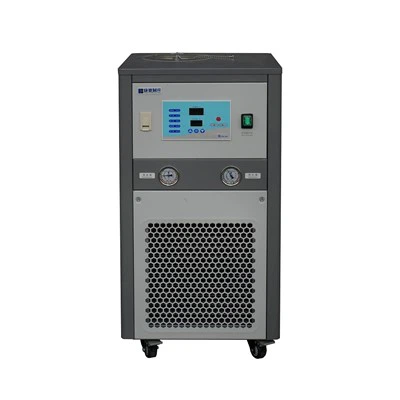

The installation quality of chemical chillers directly affects operational stability, energy efficiency, and service life. Because chemical environments often involve corrosive media, complex piping, and stringent temperature control requirements, installation must adhere to scientific procedures and professional standards to mitigate potential risks.
A site and environmental assessment must be completed before installation. First, the foundation's load-bearing capacity should be checked to ensure the ground is flat and solid. If necessary, vibration damping pads or concrete bases should be added to reduce the interference of compressor vibration on the equipment and surrounding piping. Second, a reasonable layout must be planned: the chiller should maintain a safe distance from heat sources (such as reactors and furnaces) to avoid heat radiation affecting cooling efficiency; sufficient space should be reserved for ventilation openings to ensure smooth airflow and prevent high-pressure alarms caused by poor condenser heat dissipation; it should also be located close to process cooling points to shorten chilled water delivery distances and reduce piping cooling loss.
Pipeline connections are a critical aspect of the installation process. The chilled water and cooling water systems should use corrosion-resistant pipes (such as stainless steel or plastic-lined steel pipes), and sealing gaskets should be installed at flanges or threaded connections to strictly prevent leaks-leaks of chemical media can not only corrode equipment but also cause safety hazards. Pipelines must be equipped with slopes and vent valves to prevent air blockages that could lead to uneven flow. Valves and filters should be installed in easily accessible locations, and filters must be thoroughly cleaned before water is supplied to prevent impurities from entering the unit's heat exchanger and causing blockages or wear. Electrical connections must be performed by qualified personnel to ensure that the voltage and frequency match the unit's nameplate and that grounding is reliable, preventing malfunctions caused by leakage or overload.
After completing the mechanical and electrical installations, system commissioning is required: first, test the water circulation separately to check if the pressure and flow rate meet the design values; then, start the unit under no-load and observe the compressor and fan operation to confirm there is no abnormal noise or vibration; finally, conduct a load test run to monitor the stability of the outlet water temperature and energy consumption data to verify that the temperature control accuracy meets process requirements.
Proper installation is a prerequisite for the efficient and reliable operation of chemical chillers. Only by taking into account environmental compatibility, pipeline sealing, and system coordination can a stable cold source be continuously provided for chemical production.