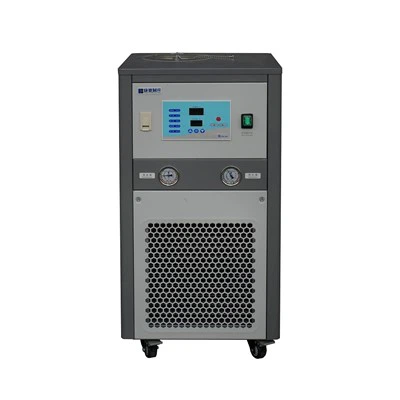

Metalworking chillers play a crucial role in cooling and lubrication in processes such as turning, milling, grinding, laser cutting, EDM, and welding. Their performance directly affects machining accuracy, tool life, and production efficiency. To ensure equipment safety, reliability, energy efficiency, environmental friendliness, and to meet industry application requirements, the design, manufacture, and use of metalworking chillers must adhere to a series of stringent standards covering multiple dimensions, including safety, energy efficiency, environmental adaptability, and performance evaluation.
Regarding safety regulations, chillers must comply with relevant electromechanical equipment safety standards, which clearly stipulate requirements for electrical insulation, grounding protection, protection against electric shock, protection against mechanical injury, and protection against high-temperature surfaces. For example, the electrical system should meet insulation resistance and withstand voltage test requirements to prevent short circuit risks caused by moisture or metal shavings; moving parts must be equipped with protective covers and emergency stop devices to ensure operator safety. For pressure vessels and pressurized pipelines, special equipment safety technical specifications should be followed, with strength checks and regular inspections to eliminate the risk of explosion.
Performance and energy efficiency standards are crucial for evaluating the overall quality of chillers. National and industry standards provide quantifiable indicators for cooling capacity, temperature control accuracy, flow and pressure parameters, refrigerant charge, and operating noise limits to ensure stable output of designed cooling capacity under various operating conditions. Addressing the intermittent loads and high-dust environments common in metal processing, standards also specify requirements for the cooling system's immunity, dustproof capabilities, and continuous operational reliability to ensure consistent performance under prolonged full-load or frequent start-stop conditions.

Environmental protection standards are increasingly emphasized. Refrigerants used in chillers must comply with national and international environmental regulations, restricting the use of substances with high global warming potential (GWP) and encouraging the use of low-GWP or natural refrigerants. Noise and vibration control indicators aim to minimize interference with the workshop and surrounding environment; wastewater and waste liquid discharge must also comply with relevant regulations to prevent contamination by cutting fluid or cooling media.
Furthermore, metal processing chillers must undergo compatibility assessments in accordance with industry application standards. To address the cooling requirements of different processing techniques, the standard recommends comprehensively considering heat source characteristics, cooling medium type, and circulation method during model selection. It also recommends verifying temperature control accuracy and flow stability during the installation and commissioning phase to ensure a good match with the machine tool and processing technology.
In summary, the standard system for metalworking chillers prioritizes safety, focuses on performance and energy efficiency, and emphasizes environmental protection, providing a unified technical basis for equipment research and development, production, and application. Adhering to and implementing these standards will not only improve equipment reliability and lifespan but also promote the metalworking industry towards high-quality, high-efficiency, and sustainable development.